
Imagine a young woman who spends her days cooking home-cooked meals, maintaining a spotless interior and pampering her partner, all while enjoying a comfortable life without worrying about the bills. What does that sound like to you? A tradwife, that figure that's all the rage on TikTok, or rather a sugar baby navigating the waters of sugar dating? Frankly, the two worlds sometimes come very close, and that's what makes the comparison so intriguing.
In this article, we take a look at these unexpected similarities and glaring discrepancies, with an eye to the current trends that are shaking up the networks. Because yes, between the vintage videos on TikTok and the discreet arrangements circulating on specialist apps, there's plenty to think about.
The tradwife phenomenon: when TikTok reinvents the 50s
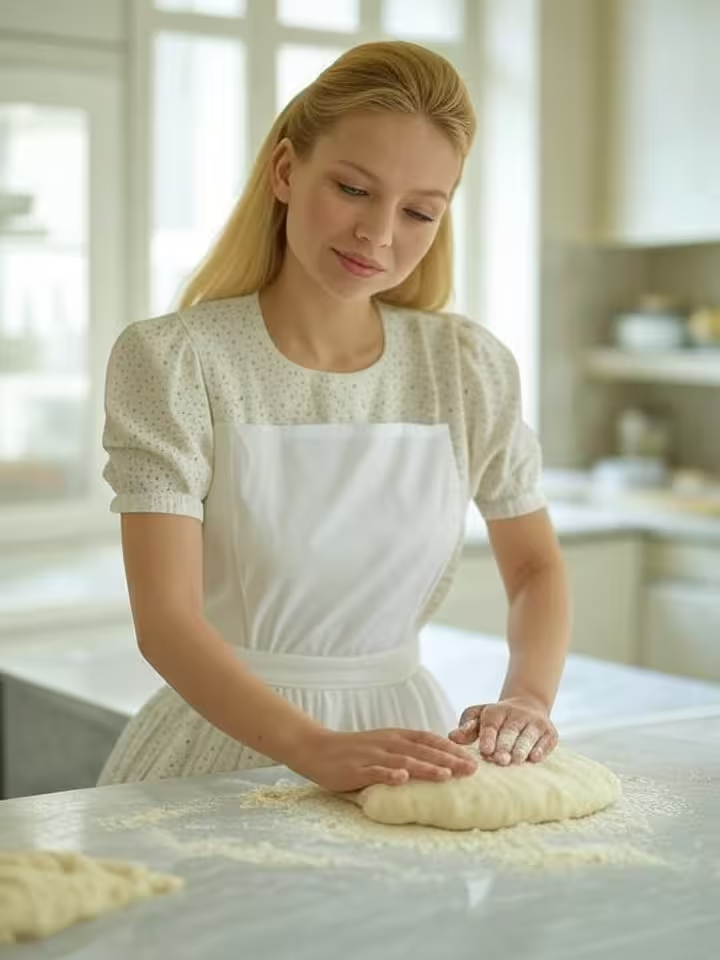
Tradwives, those followers of the «traditional wife» lifestyle, have been taking the internet by storm over the last few months. Take Nara Smith, the influencer who has exploded on TikTok with her videos in which she prepares everything from scratch, from bread to cheese, in a revisited 50s aesthetic. In fact, from what I've seen on Twitter in recent weeks, the hashtag #tradwife has skyrocketed, especially after heated debates about feminism post-#MeToo.
A viral tweet from French user @femmeaufo quipped: «Are tradwives the new feminism? Or just an Instagram filter on the 50s?» It garnered thousands of likes, with responses ranging from enthusiastic approval to scathing criticism of the throwback. As a result, discussions are emerging about how this lifestyle fits into a world where women are seeking independence, but also a form of serenity far removed from professional burnout.
Unsurprisingly, recent surveys, such as the one by YouGov in March 2024, show that 28 % of young American women (and similar numbers in Europe) find the idea of a traditional domestic role attractive, boosted by the pandemic which has put the home back at the centre. In France, things are more nuanced: there's less talk of pure tradwives, but rather of a mix with our art of living, like these female influencers from Lyon who post stories of their days in the bouchons, combining gastronomy and a fulfilled family life.
And let's face it, there's a bit of irony in all this. On X (formerly Twitter), memes are comparing tradwives to vintage hoover ads, but with a modern twist: «Tradwife life: cook organically and post on Insta». It's clearly trending, especially among Gen Z, who are flirting with the retro aesthetic without necessarily embracing it wholeheartedly.
Sugar babies: between empowerment and controversy
Let's move on to sugar babies. We see them more on apps like Seeking or on discreet forums, but recently, threads on Reddit and Twitter have put the subject back on the table. For example, a viral post in English by an anonymous sugar baby, shared in February 2024, described how she finances her art studies in Paris through sugar dating, without taboo. «It's empowering, not victimising», she said, and it sparked heated debate, with retweets in French highlighting the similarities with French-style dating, more fluid and less codified.

In fact, a Bumble app study from April 2024 reveals that 15 % of French users aged 18-24 are considering non-traditional dating arrangements, influenced by inflation and the cost of living. In fact, on TikTok, videos in French tagged #sugardatingfrance show young women sharing tips on the «red flags» to avoid, such as an overly possessive sugar daddy. As a result, the term is circulating more freely, with opinions divided: boomers see it as opportunism, while influencers like those at Madmoizelle defend it as a form of economic freedom.
In short, it's not just a passing fad. As the blog Sugar Daddy En France (sugardaddyenfrance.fr) explains, this type of arrangement is part of a wider evolution in modern relationships, where transparency about expectations is replacing the traditional unspoken. In Provence, for example, where the art of living includes endless dinners in farmhouses perched on the hills of the Luberon, some sugar babies make this a natural part of their lifestyle, far removed from Parisian clichés.
These intriguing similarities
Frankly, the first similarity that jumps out is the financial dependence. A tradwife relies on a traditional marriage where the husband provides, while a sugar baby opts for a more explicit arrangement, often without the eternal vows. In both cases, the idea is one of exchange: companionship, affection and a harmonious home in exchange for material stability.

On Twitter, a recent thread by a British sociologist pointed this out: «Tradwives and sugar babies are challenging liberal feminism by bringing gendered exchange back into fashion». And then there's the aesthetics. Tradwives with their polka-dot dresses and immaculate kitchens, sugar babies posting stories of weekends in Biarritz, at the Hôtel du Palais, with a glass of rosé in hand.
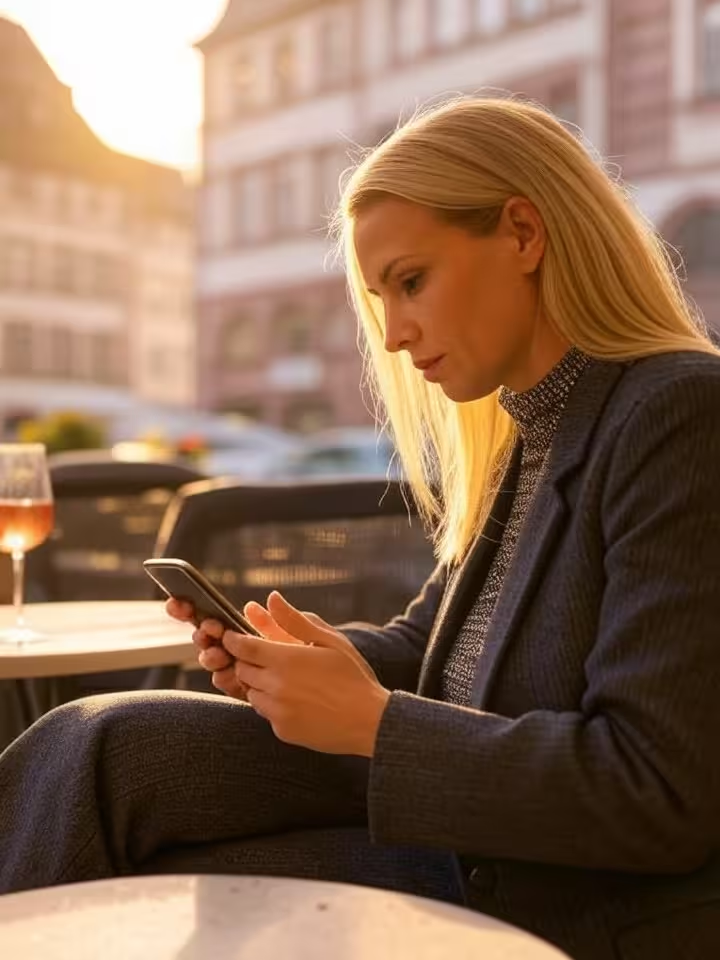
In other words, both promote a form of polished, almost performative femininity. In France, this resonates with our innate seduction: think of those aperitifs on the terraces of Strasbourg, where a witty conversation can lead to unexpected arrangements, whether trad or sugar. That said, opinions from influencers like Léna Situations, who tweeted in May 2024 about female empowerment, underline that both can be liberating choices, far from hasty judgements.
Another less obvious similarity is the search for a certain quality of life. Whether it's the tradwife cultivating her garden in Normandy or the sugar baby enjoying a weekend in Annecy, they're both looking to escape the stress of the modern day. Sugar Daddy Planet describes this dynamic as a response to the professional and emotional exhaustion that particularly affects millennials and Gen Z.
The differences that make all the difference
Now let's look at the differences. A tradwife is often a lifelong commitment, anchored in conservative values, with children and a house in a posh suburb like Neuilly-sur-Seine. A sugar baby, on the other hand, is more fluid, temporary, like a tacit contract that can end overnight - a bit like ghoster on a dating app. On X, a French user posted: «Tradwife = forever, sugar baby = for now. Simple as that.»
What's more, the social context is changing everything. Tradwives are riding a retro wave, boosted by series such as «The Marvelous Mrs Maisel» and French podcasts on the modern couple. Sugar babies, on the other hand, are navigating a digital world, with matches on apps and impromptu trips to Annecy for a weekend at the lake.
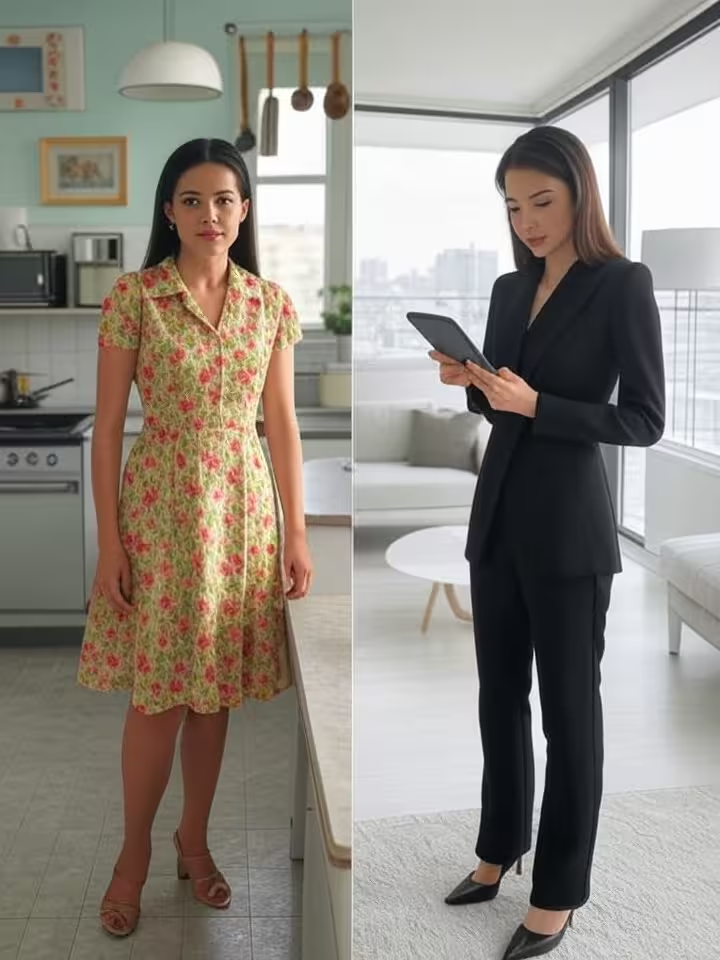
It has to be said that tradwives attract more criticism for being anti-feminist, while sugar babies are seen as pragmatic, especially among millennials struggling with rents in Bordeaux. Still, in regions like the Côte d'Azur, where the glamour of Cannes mixes with luxury and discreet arrangements, sugar babies seem better suited to the hectic pace, unlike tradwives who prefer the tranquillity of a Provençal village like Gordes.
Transparency also differs radically. A tradwife evolves within a socially accepted framework, even valued in certain conservative circles. A sugar baby, even if attitudes are changing, still navigates a grey area between moral judgement and recognition of her autonomy. It's a subject that's covered extensively on Sugar Daddy En France (sugardaddyenfrance.fr), where the testimonials show how building authentic relationships despite prejudice.
What it says about our times
Looking back, these similarities and differences highlight how gender roles are changing, or not, in our society. On the networks, debates are raging, with viral tweets comparing the whole thing to an episode of «Plan Cœur» on Netflix. Nevertheless, whether you're tempted by one or the other, the important thing is to make an informed choice, with a dash of French wit - that art of navigating relationships with elegance and a touch of humour.

So if you come across a tradwife sipping a coffee in Aix-en-Provence or a sugar baby at an art opening in Lyon, ask yourself: is it all that different? Maybe not so much, really. Both embody lifestyle choices that defy the norm, each in their own way. And in a world where individual freedom is paramount, who are we to judge?
What we can be sure of is that these phenomena will continue to fuel conversations, both on the web and in Parisian bistros. Because in the end, they touch on something universal: the quest for balance between independence and security, authenticity and performance, tradition and modernity. And that's fascinating.